How to Use Strategic Signage to Guide Customers and Build Trust
Your physical location speaks to potential customers long before anyone walks through your front door. Every person who drives past your storefront, walks down your hallway, or visits your booth at an event is instantly forming an opinion about your organization. Poor signage creates confusion and friction, while thoughtful signage welcomes visitors, builds instant credibility, and makes navigation effortless. Mastering the physical environment of your business is one of the most effective ways to improve customer experience without spending a fortune on complex advertising.
Physical signs serve as silent ambassadors for your brand. They operate around the clock, providing vital information and establishing a professional atmosphere. When businesses need to upgrade their physical spaces, they often look to specialized providers like AlphaGraphics Northwest Tampa to design durable, high-impact visual displays. The secret to effective signage is not making it as loud or flashy as possible, but making it clear, functional, and perfectly suited to the space it occupies.
The Psychology of Physical Space and Wayfinding
Human beings naturally seek comfort and clarity when entering a new environment. If a customer cannot immediately figure out where to park, where to enter, or where to check in, anxiety rises and satisfaction drops. Strategic signage solves this problem by creating intuitive pathways through physical spaces.
- First impressions: Exterior signs signal professionalism and assure visitors they are in the right place.
- Reduced friction: Clear wayfinding indicators eliminate the frustration of wandering around lost, creating a positive initial brand interaction.
- Brand reinforcement: Consistent colors, logos, and typography across all physical displays unify your physical and digital identities.
Essential Types of Business Signs and Their Uses
Different signs solve different operational and marketing challenges. Knowing which sign to use in a specific situation ensures your message hits its mark.
1. Exterior and Building Signs
Your building sign is your primary beacon. It identifies your location to passing vehicle and foot traffic, making it easy for customers to spot you from a distance. High-contrast lettering and clean lighting are essential for maximizing visibility day and night.
2. Wayfinding and Directional Signage
Once people are inside your facility, wayfinding signs take over. These include lobby directories, room numbers, overhead aisle markers, and safety instructions. Good wayfinding is invisible—it works so well that people reach their destination without ever having to think about it.
3. Window, Wall, and Floor Graphics
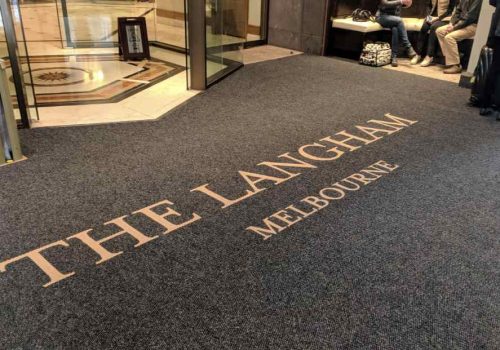
Blank walls and glass windows represent unused canvas space. Applying custom graphics to these surfaces transforms ordinary rooms into branded environments that share your story, display promotions, or enhance privacy.
Best Practices for Designing Clean, Effective Signs
Effective signage must communicate its message in a matter of seconds. If a sign takes too long to read, it fails its purpose.
- Keep text concise: Limit your wording to the absolute essentials. Aim for a message that can be read and understood in three seconds or less.
- Prioritize contrast: Ensure that text colors stand out sharply against the background so the sign remains legible from a distance and in varying lighting conditions.
- Match scale to distance: Design your font sizes based on how far away the viewer will be standing. Larger spaces require bolder, larger lettering.
Evaluating and Updating Your Current Signage
Take a fresh look at your business location through the eyes of a brand-new visitor. Walk out to the street, approach your entrance, and navigate your interior spaces. Are your signs outdated, peeling, or hard to read? Do they accurately reflect your current services? Updating tired visual displays is a straightforward investment that immediately elevates your brand image and makes your physical space work harder for your business.