Indoor Safety Signs: The Fastest Way to Reduce Workplace Accidents
Most workplace accidents happen because people were never warned. A missing sign, a faded label, or a blank wall near a hazard can lead to serious injuries. According to the U.S. Bureau of Labor Statistics, employers reported 2.6 million nonfatal workplace injuries in 2023, many of which were preventable.
Indoor safety signs are visual tools that warn people, guide behavior, and prevent accidents inside a building. If you manage a facility, office, warehouse, or school, this directly affects you.
Why Do Indoor Safety Signs Matter?
People don’t memorize safety manuals. They react to what they see.
A clear sign placed in the right spot can stop an accident before it happens. It also shows employees, visitors, and inspectors that you take safety seriously.
Here is what I see most often: facility managers assume their team “already knows” the risks. That assumption is dangerous. New employees, contractors, and visitors don’t know your space — your signs do the job for you.
What Happens When You Don’t Have Proper Signage?
Three things happen fast:
- Injuries increase in unmarked hazard zones
- OSHA violations lead to heavy fines
- Legal liability grows if someone gets hurt and no warning was posted
In my experience, a simple audit reveals that most facilities are missing signs in at least 3 to 5 critical areas. That’s not a small gap; that’s real risk.
What Types of Indoor Safety Signs Do You Actually Need?
1. Mandatory Signs
These tell people what they must do.
- “Wear Eye Protection”
- “Hard Hat Required”
2. Warning and Caution Signs
These point out nearby hazards.
- “High Voltage”
- “Slippery When Wet”
3. Prohibition Signs
These stop unsafe behavior.
- “No Smoking”
- “Authorized Personnel Only”
4. Emergency and Exit Signs
These guide people during a crisis.
- Lit exit signs
- Fire extinguisher locations
- First aid station markers
The area most facilities get wrong? Emergency signage. If the power goes out or smoke fills a hallway, your team needs to find the exit fast. Illuminated and clearly placed signs save lives in those moments.
How Do You Stay Compliant?
Follow these simple steps:
- Use ANSI Z535 standards as these cover colors, symbols, and wording
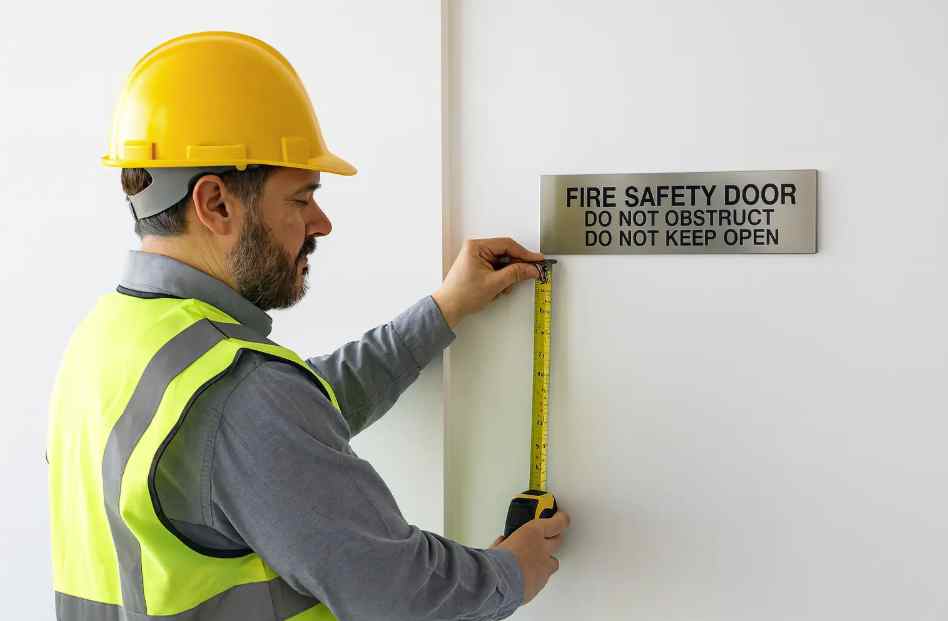
- Place signs at eye level and close to the actual hazard
- Use picture-based signs in areas with multilingual workers
- Review your signs every year as faded or blocked signs don’t count
The mistake I see most often is treating signage as a one-time task. Signs wear out. Layouts change. Your signage should keep up.
What Should You Do Right Now?
Walk your facility today. Look for areas with no signs, old signs, or signs that are hard to read.
Ask yourself:
- Are all hazard zones clearly marked?
- Can someone new find the exit in an emergency?
- When did you last update your signs?
Indoor safety signs are simple, affordable, and highly effective. Fixing your signage today could prevent a serious injury tomorrow. Start with a quick audit and take action on what you find.